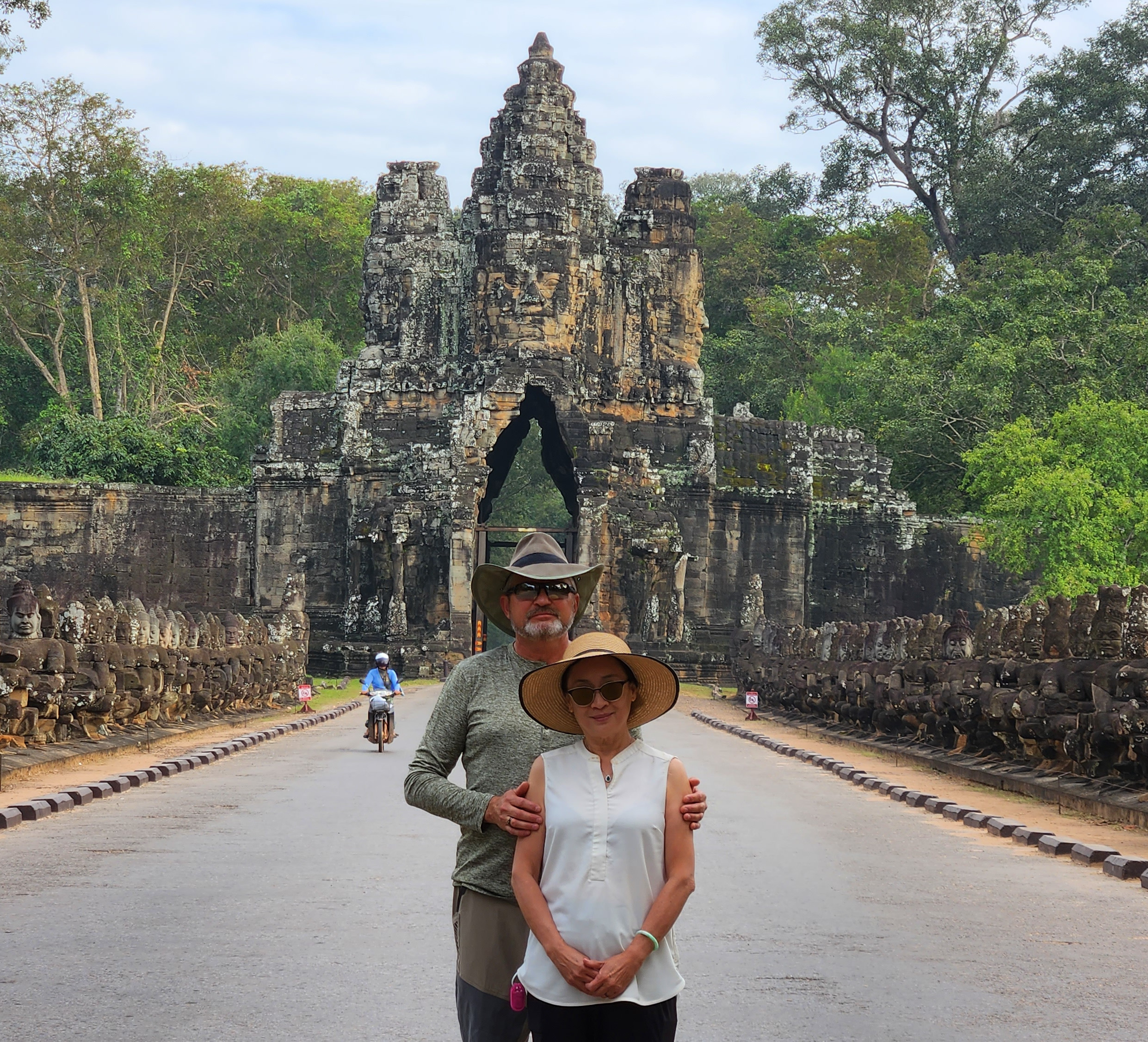
Asia: The Land of Infinite Wonder
Welcome! We are CamHong and Paul. Today, we are spinning the globe and getting a satellite overview of the largest, most densely populated, and historically layered continent on Earth: Asia. A bit daunting description? Consider the brochure version: The most diversified landmass on earth where anyone can turn off the tele, walk to the veranda, tip that fresh cup of java and experience life. We grew up turning the pages of National Geographic, raptured by the History Channel, and will forever miss the wonders introduced to our young imagination by Marlin Perkins on the Wild Kingdom. In Asia, the experience is a living pulse.
Infinite Wonder Awaits
When we take a satellite view of this massive continent, we see an invitation to completely redefine your quality of life. Rather than spending your retirement merely watching history on television, retiring in Asia physically immerses you into the cradle of human civilization.

Genuine Offerings of a Mystical Land
There are places on this earth where one retires to experience a relaxing café along cobblestone walks, rolling surf beneath a tiki umbrella, or a round of golf across blue-green highlands. You will find all this in Asia and around every corner Asia will offer the outdoor enthusiast a place where life drums against your heart, where every day begs you to get out of that chair and experience a new adventure.
Ancient Pathways
Walk the ancient paths of human ingenuity and international trade.
Breathtaking Exploration
Swap a predictable retirement for a front-row seat to infinite historical wonder, natural awe, and ancient traditions.
Actionable Realities
Find real-world peace of mind by exploring diverse microclimates, phenomenal healthcare, and welcoming local communities.
Cultural Diversity
Journey across global cultural diversity of food, music, and lifestyles – in an afternoon stroll.
Conquest & Catastrophes: The Shaping of Nations
Exploration
CamHong and I have a passion for history at the sociological and cultural level – as a people and the planet we live on. This makes Asia a candy land for exploration. Historical trade and exploration of Asia have existed since man first discovered he could barter goods along a beaten path, limited only by what he could carry by pack or cart. Then, in 1497, Vasco da Gama changed the course of history when he rounded the Cape of Good Hope and in May, 1498 introduced the cargo carrying capacity of ships, forever altering world powers with an oceanic route to Asia. The exponential expansion of trade from Asia introduced mankind’s largest global influence toward economic and cultural growth. From the temples of ancient Greece, might of Egyptian pyramids, roads of Rome, fashions of Paris, seasoning of a Michelin rated meal, poetic notes of a piano, and telling of time itself, the modern world has forgotten the contributions and continued influence of Asia.

The Maritime Pivot: Vasco da Gama (1498)
The opening of oceanic routes to Asia revolutionized global trade capacity, connecting continents and shifting worldwide geopolitical power forever. [1]
Age of ExplorationHistory and Conquest
Asia exists as the cradle of human civilization and the engine of modern global trade. Spanning 48 countries, home to over 4.7 billion people, this one continent covers over 30% of the earth’s land mass. Historically defined by massive infrastructure networks and the evolution of global trade, the history of Asia has influenced the evolution of our world through sweeping military campaigns, catastrophic events, and a level of genetic evolution and human ingenuity that defines all of mankind.
1. The Mongol Empire (13th–14th Century)
The largest contiguous land empire in human history, initiated by Genghis Khan.
- Scale: Stretched from the Pacific Ocean to Eastern Europe, covering over 24 million square kilometers.
- Impact: Opened the Silk Road for unprecedented global trade, created the Pax Mongolica, and altered entire populations and societies.
- Key Regions: Conquered China (Yuan Dynasty), Central Asia, Persia, and parts of Russia.
2. The Macedonian Empire (336–323 BCE)
The rapid expansion of Macedonian rule by Alexander the Great fused Greek and Asian cultures.
- Scale: Extended from Greece through Egypt, Persia, and into modern-day Pakistan and India.
- Impact: Initiated the Hellenistic Period, spreading Greek art, language, and philosophy across Asia.
- Key Regions: Overthrew the massive Achaemenid (Persian) Empire.
3. The Roman Empire (133–64 BCE)
The rapid expansion of Roman authority united nations of Western Asia and open trade routes across the Asian continents that persist to this day.
- Scale: Extended control under The Province of Asia as Rome annexed Turkey, Syria, Jordan, Israel, Lebanon and Iraq.
- Impact: The cross-cultural exchange introduced knowledge and arts to expand agricultural wealth, introduced taxation, expansion of arts and architecture, and the establishment of trade hubs that benefit cultures and economies of nations around the world today.
- Key Regions: Asia Minor, The Levant, and Mesopotamia fell to Roman authority until the Parthian Empire (Sasanian) brought Rome’s expansion East to a halt.
4. The Early Islamic Conquests (7th–8th Century)
The rapid expansion of the Rashidun and Umayyad Caliphates following the death of Prophet Muhammad.
- Scale: Stretched from North Africa across the Middle East into Central Asia and the borders of India.
- Impact: Permanently altered the religious and linguistic landscape of Western and Central Asia.
- Key Regions: Absorbed the Sasanian Empire (Persia) and severely weakened the Byzantine Empire.
5. The Timurid Conquests (14th Century)
The brutal, highly destructive campaigns led by the Central Asian conqueror Timur (Tamerlane).
- Scale: Covered Central Asia, Persia, Iraq, Syria, and northern India.
- Impact: Founded the Timurid Renaissance, which later directly influenced the creation of the Mughal Empire in India.
- Key Regions: Sacked Delhi, defeated the Ottoman Empire at Ankara, and devastated Mesopotamia.

The Timurid Renaissance & Expansion
Timur’s central Asian campaigns transformed artistic, administrative, and military structures across Persia, the Levant, and India. [2]
Liberating Narratives6. Han and Tang Dynasty Expansions (2nd Century BCE & 7th Century CE)
The outward push of Chinese imperial power to secure trade routes and buffer zones.
- Scale: Extended Chinese authority deep into Central Asia, Korea, and Vietnam.
- Impact: Controlled and secured the lucrative Silk Road trade, leading to deep cultural integration across East Asia.
- Key Regions: Tarim Basin (Xinjiang), the Korean peninsula, and northern Vietnam.
7. The Mughal Empire (16th–17th Century)
An Islamic early-modern empire of Central Asian Turkic-Mongol origin that dominated the Indian subcontinent.
- Scale: Ruled over nearly the entire South Asian landmass, governing over 150 million subjects.
- Impact: Fused Persian, Islamic, and regional Indian cultures, resulting in architectural marvels like the Taj Mahal.
- Key Regions: Consolidated control over modern-day India, Pakistan, Bangladesh, and eastern Afghanistan.
Genetic Footprint and "Exotic" Traits
The sweeping conquests and trade route expansions across Asia did not just rewrite political borders; they fundamentally transformed the continent’s genetic and cultural landscape creating pockets of unique physical traits and deep cultural integration that continue to fascinate many world as we seek to discover our genetic heritage.
The "Blue-Eyed Villagers" of Liqian (Gansu, China)
In the remote northwest village of Zhelaizhai/Liqian, many residents possess striking West Eurasian features, including blue or green eyes, hooked noses, and fair or blonde hair.
- The Myth: Popular local legend and an old hypothesis by sinologist Homer Dubs claimed these villagers were descendants of a "lost legion" captured by the Parthians and later employed as mercenaries along the Chinese frontier.
- The Reality: While genetic testing confirms that up to 56% of some villagers’ DNA is Caucasian in origin, comprehensive modern DNA research has debunked the specific Roman myth. Instead, their European traits are the result of centuries of continuous West Eurasian gene flow, driven by Silk Road merchants, Indo-European pastoralists (like the Tocharians), and Central Asian migrations passing through the Hexi Corridor.

Hexi Corridor Genetic Synthesis (Liqian Study)
Modern genomic mapping revealed continuous Silk Road pastoralist admixture rather than isolated legionary ancestry in northwestern China. [3]
South China PostThe Genghis Khan Legacy
One of the most famous genetic footprints in human history stems from the Mongol conquests. Geneticists have discovered that roughly 8% of men living across the former Mongol Empire region (about 0.5% of the world’s total male population) carry an identical Y-chromosome lineage tracing back to a single common ancestor from 13th-century Mongolia, widely attributed to Genghis Khan and his immediate male relatives.
The Uyghurs & Silk Road Crossroads
The Xinjiang region in northwest China stands as a primary genetic crossroads of Eurasia. Due to centuries of Han, Tang, and Mongol military expansions colliding with Western nomadic groups, the modern Uyghur population exhibits a stratified genetic mixture of roughly 50% East Asian and 50% West Eurasian ancestry, resulting in a high prevalence of hazel eyes, diverse hair textures, and varied skin tones within the same families.
Cultural Footprint

Gandharan Greco-Buddhist Sculpture Synthesis
The iconic convergence of Hellenistic drapery aesthetics and Buddhist spiritual symbolism developed in ancient Gandhara. [4]
Metropolitan MuseumCatastrophes that Alter Our Climate
The sweeping conquests of the Mongolian Empire to the expansion of Rome, the influence of the Asian continent shaped the world of man. The geological breadth of the continent reshaped the planet: from super-eruptions that plunged the planet into volcanic winters, to natural catastrophes like the 1815 eruption of Mount Tambora in Indonesia, which triggered a "year without a summer" across the globe.
1. The Toba Super-Eruption (c. 74,000 Years Ago)
Geopolitical Location: Sumatra, Indonesia
Global Environmental Impact: As the largest volcanic event of the last 2 million years, Toba ejected an astonishing 2,800 cubic kilometers of material into the atmosphere. The resulting stratospheric sulfur aerosol veil blocked out sunlight, triggering a severe "volcanic winter" that dropped global temperatures by 3°C to 5°C. This caused widespread deforestation across South Asia, heavily disrupted tropical monsoons, and severely depleted the global ozone layer for over a year.

2. The Changbaishan / Millennium Eruption (c. 946 AD)
Geopolitical Location: Border of China and North Korea
Global Environmental Impact: One of the most violent eruptions of the last two millennia, the Millennium Eruption expelled a massive cloud of volcanic ash and sulfur. The atmospheric currents were so powerful that its volcanic ash was carried thousands of miles away, settling into the ice sheets of Greenland and across northern Japan. It caused notable short-term global cooling and localized weather disruptions throughout East Asia.
3. The Mount Samalas Eruption (1257)
Geopolitical Location: Lombok, Indonesia
Global Environmental Impact: This colossal medieval eruption released one of the largest sulfur loads into the atmosphere of the past several millennia. The environmental fallout was global, triggering a sudden cooling of the planet that scientists link to the onset of the Little Ice Age. Historical records across Europe and Asia document a severe climate anomaly in 1258 characterized by continuous summer rains, failed harvests, and widespread famine.
4. The Mount Tambora Eruption (1815)
Geopolitical Location: Lesser Sunda Islands, Indonesia
Global Environmental Impact: Tambora ranks as the most powerful volcanic eruption in recorded human history (VEI-7). It blasted massive quantities of sulfur dioxide into the stratosphere, which circled the globe and caused the infamous "Year Without a Summer" in 1816. Global temperatures plunged, leading to severe frost, widespread crop failures, and heavy snowfalls during June and July across Western Europe and North America, culminating in the worst worldwide famine of the 19th century.
5. The Krakatoa Eruption (1883)
Geopolitical Location: Sunda Strait, Indonesia
Global Environmental Impact: Krakatoa’s cataclysmic explosion blew the island apart and sent a massive aerosol plume into the stratosphere. The sulfur dioxide increased the Earth’s cloud reflectivity (albedo), causing global temperatures to drop by approximately 1.2°C the following year. Weather patterns remained highly chaotic for five years, and the particulate matter filtered sunlight so uniquely that people worldwide witnessed vivid, blood-red sunsets and "blue moons" for years after the event.
6. The Tunguska Asteroid (1908)
Geopolitical Location: Siberia, Russia
Global Environmental Impact: The largest cosmic impact even in recorded Human History. The asteroid or comet detonated as an airburst (roughly 5 to 10 kilometers above the taiga), releasing 10 to 30 megatons of energy and flattening approximately 2,150 square kilometers (830 sq miles) of forest.
Architectural Footprint Influencing the World and Standing Against Time
The architectural and structural innovations of Asia’s history profoundly shaped architectural traditions in Mediterranean, African, and European empires:
| Asian Architectural Innovation | Transmitted Technique / Feature | Impact on Non-Asian Empires |
|---|---|---|
| Megalithic T-Pillars & Dry Masonry (Göbekli Tepe & Jericho) |
Post-and-lintel load transfer; dressed monumental stonework | Transmitted across Neolithic trade routes to Aegean and European cultures, inspiring early Mediterranean megalithic temples (such as those in Malta and Brittany) and Cyclopean fortifications. |
| Stepped Platforms & Ziggurats (Uruk & Mesopotamia) |
Terraced mudbrick podiums; visual elevation of temples | Heavily influenced early dynastic Egyptian step pyramids (e.g., Pyramid of Djoser at Saqqara) and later Roman monumental podium temples. |
| Advanced Hydraulics & Mortar Waterproofing (Indus Valley) |
Fired-brick bonding; bitumen tank lining; grid-based storm drainage | Diffused westward through Maritime and Persian Gulf trade routes, inspiring Minoan and Roman municipal sewer systems, aqueducts, and public thermal baths. |
| Monumental Timber Framing & Stone Ashlar (Near East to Persia) |
Hypostyle columned halls; high gabled stone tombs (e.g., Tomb of Cyrus) | Directly adopted by Classical Greek and Hellenistic architects, inspiring monumental structures like the Mausoleum at Halicarnassus and Roman imperial hypostyle basilicas. |
Structures That Stand Against Time
One of the most interesting things to do across Asia is to visit the enduring testaments of mankind. Temples, castles, and architectural wonders that continue to provide a historical reminder that our ancestors were capable of construction techniques thousands of years ago that withstood war, natural disaster, and time itself. Be sure to take a local guide, the stories and philosophies are literally written on the walls and you’ll want to know what they say.

Towers of Tell Qaramel
The settlement has several circular stone towers served as communal gathering places, social centers, and ritual shrines for local hunter-gatherer and proto-farming communities dating back to the period between 10,650-9,650 BCE, making them the oldest extant structures in the world. [6]
Echoes In the Mist

Tower of Jericho
Built around 8000 BCE at Tell es-Sultan, this 8.5-meter-tall (28 ft) stone fortification tower features an internal stone staircase and represents early monumental public architecture. [8]
Madain Project
Ebla Royal Palace G
Dating to approximately 2400–2300 BCE, the archaeological remains of the ancient royal palace complex provide some of the earliest standing palatial architecture in Western Asia. [9]
Ruins of Time
Songyue Pagoda
Completed in 523 CE during the Northern and Southern Dynasties period, this 40-meter-tall (131 ft) circular brick pagoda in Henan Province is China’s oldest surviving above-ground pagoda building. [10]
Henan MuseumGeography
Today, the Geography of Asia ranges from the sub-zero steppes of Siberia to the sweltering, hyper-dense tropics of Southeast Asia. This is a land created for outdoor enthusiasts. From the world’s highest mountains, deepest canyons, largest caves, and colorful coastal reefs, Asia provides over 288 UNESCO World Heritage sites to explore. And exploration is vast, the United Nations recognizes six major geographic subregions, each with a unique evolution of topography, climate, and cultural dynamics:
Central Asia
Landlocked steppes and rugged mountains stretching from the Caspian Sea to China.
Kazakhstan, Kyrgyzstan, Tajikistan, Turkmenistan, UzbekistanEast Asia
Covers the eastern part of the continent and major dynamic island nations.
China, Japan, South Korea, North Korea, Mongolia, TaiwanSouth Asia
Encompasses the southern subregion, Himalayas, and the Indian subcontinent.
India, Pakistan, Bangladesh, Nepal, Bhutan, Sri Lanka, MaldivesSoutheast Asia
Lies south of China and east of India, featuring lush peninsulas and vast archipelagos.
Indonesia, Thailand, Vietnam, Philippines, Malaysia, Singapore, Myanmar, Cambodia, Laos, Brunei, Timor-LesteWestern Asia
Frequently referred to as the Middle East, bridging Asia, Africa, and Europe.
Saudi Arabia, Iran, Iraq, Turkey, Israel, Jordan, Arabian Peninsula & CaucasusNorthern Asia
Consists of the vast Asian portion of Russia, historically known as Siberia.
Siberian Federal District / North Asian SteppeAsia: Is It a Retirement Destination?
Estimates tracking the wider Asia-Pacific region suggest that 27 to 31 million people change their country of usual residence within or into the region on an annual basis with Southern Asia experiencing the highest net migration flows. As global economies continue to grow and age alters one’s tolerance for climate change, a passive income and stable climate encourages relocation in order to retain a desired lifestyle.
For the year 2025, the U.S. Social Security Administration (SSA) Annual Statistical Supplement reported 205,575 total beneficiaries residing in Asia. However, many expats seek resident visas in foreign nations without SSA benefits to avoid taxation restrictions. Considering the cost benefit of SSA benefits and 30-60% Cost-of-Living savings, and that federal retirement benefits such as Medicare have no value outside the U.S. it is not too hard to understand why there is a disparity between SSA, IRS, and Federal Voter Registration numbers of U.S. citizens abroad.
The Internal Revenue Service (IRS) reported that approximately 1.4 million to 2 million U.S. citizens continue to file federal tax returns from outside the United States. However, the United States utilizes a unique citizenship-based taxation system, the IRS technically considers all U.S. citizens living overseas—estimated by the U.S. Department of State in 2025 to be between 5 million and 9 million U.S. citizens with nearly 1 million residing in Asia. That is a 33 percent increase since 2022. As of 2026, nearly 11% of Canada’s entire population have relocated to foreign lands. While this is relatively new trend in North America, the European culture has always leaned into foreign relocation and retirement (hence ‘The New World’).
The Socio-Political & Economic Landscape
Over the last decade, Asia has experienced rapid economic growth. Urbanization and tech infrastructure have expanded by an estimated 35%, transforming rural agricultural hubs into digital megalopolises. However, this growth has introduced significant socio-political friction, including wealth disparity and localized governmental instability in several nations.
For retirees, the paradigm has fundamentally shifted. A generation ago, European coastlines were the gold standard for North American retirement. Today, because of extreme cost-of-living arbitration, high-quality private healthcare access, and an embrace of the sabai sabaiRelaxed, comfortable, taking life easy lifestyle, foreign retiree tourism and long-term relocation to Asia have surged by over 40% globally with Forbes and International Living reporting multiple nations within Asia as top retirement destinations in 2026.
The Retirement Growth Index
The following nations have seen greater than a 20% increase in foreign resident visa applications over the past 10 years:
| Nation | Est. Expatriate Residents | Visa Apps (Past 3 Years) |
|---|---|---|
| Thailand | ~500,000+ | 320,000 |
| Malaysia | ~150,000+ | 45,000 |
| Philippines | ~250,000+ | 110,000 |
| Vietnam | ~100,000+ | 52,000 |
Top Destinations Spotlight – When the Sun Sets in Asia, the Cities Come to Life
Explore the premier urban and coastal hubs experiencing the highest growth in Western retiree and expat settlement:


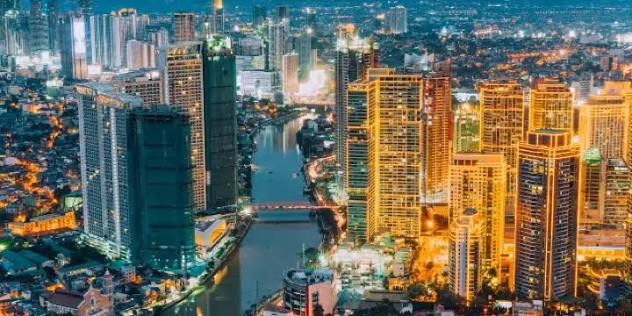
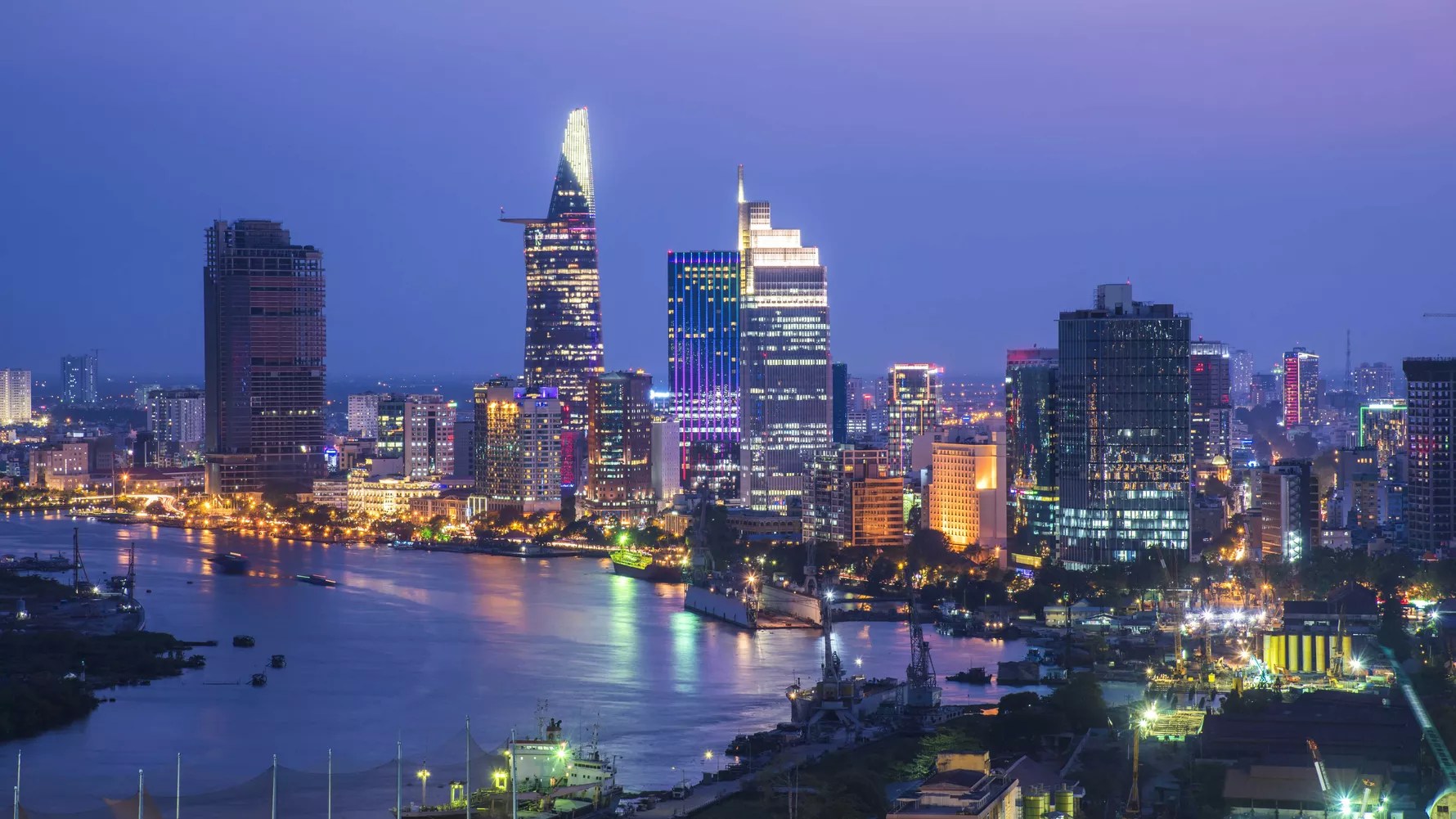
Key Growth Destinations in Asia
| Region | Country | Primary Expat Profile | Key Growth Drivers |
|---|---|---|---|
| Southeast Asia | Thailand | Digital nomads, retirees, lifestyle migrants | Introduction of long-stay programs (e.g., DTV, LTR), low cost of living, established expat infrastructure in Bangkok and Chiang Mai. |
| Southeast Asia | Vietnam | Remote workers, English teachers, tech entrepreneurs | Very low living expenses, rapid economic development, high personal finance satisfaction in hubs like Da Nang and Ho Chi Minh City. |
| Southeast Asia | Indonesia | Creative nomads, surfers, wellness/tech freelancers | Strong lifestyle hubs (particularly Bali/Canggu) and remote worker visa pathways. |
| Southeast Asia | Malaysia | Corporate professionals, families, digital nomads | High English proficiency, modern infrastructure, the DE Rantau Nomad Pass, and the MM2H retirement program. |
| East Asia | Japan | Tech workers, creatives, culture-focused nomads | A weakened yen making living significantly cheaper for USD/EUR earners, the launch of a digital nomad visa, and high safety standards. |
| West Asia (Middle East) | United Arab Emirates | High-earning tech, finance, and corporate professionals | 0% income tax, long-term Golden Visas, virtual working visas, and world-class flight connectivity. |
What Is Driving Western Migration to Asia?
1. Visa Modernization
Multiple Asian nations introduced dedicated digital nomad visas and extended long-term stay categories, allowing active retirees and a new generation to experience life by removing the legal hurdles of the past.
2. Purchasing Power Disparity
Sustained inflation and housing cost increases across North America and Western Europe have led remote workers and retirees to seek favorable exchange rates and a lower cost of living.
3. Safety & Infrastructure
Cities across East and Southeast Asia consistently have far less violent crime rates, sexual assaults, and stricter gun laws while offering a more advanced digital infrastructure and lower utility costs than the United States.
Homicide and Gun Violence Rates
- United States: Records an intentional homicide rate of roughly 5.7–6.4 per 100,000 and massive rates of private firearm ownership, making gun-related violent crime statistically high compared to other developed nations. This does not preclude gun ownership, only stricter compliance with firearm registration, stowage, use, and type.
- Japan: Renowned for near-zero firearm availability and an extremely low intentional homicide rate of roughly 0.2 to 0.3 per 100,000 residents.
- Malaysia: Frequently ranked as a top Asian retirement haven with strict weapons laws and a general violent crime footprint well below Western metrics, showing lower homicide levels than the U.S.
- Thailand: Popular expat areas (such as Chiang Mai or Bangkok) register a lower intentional homicide rate (roughly 2.2 to 2.8 per 100,000) than the U.S., with violent crime against elderly foreign residents being exceptionally uncommon due to local cultural respect for elders.
Nature of Crime and Daily Safety (UN Crime Stats)
Random Violence & Firearms
Mass shootings and random armed street encounters are statistically rare or virtually non-existent in stable Asian retirement destinations compared to the United States.
Petty vs. Drug vs. Predator
Foreigners encounter low-level opportunistic property crimes (e.g., purse-snatching) rather than violent physical assault. Drug abuse indexes place major East Asian nations at <0.1% vs. 13.7% in the U.S. Predatory crime rankings place Japan 52nd and the U.S. 9th globally.
The Context of Risk
While nighttime street safety is high, expats consistently note that non-crime risks—specifically local traffic hazards and motorbike accidents—pose a far higher tangible danger than interpersonal violent crime.
Healthcare: A Key Contributor for Retirement Migration
While employed a couple often enjoys the benefits of employment covered health care. Combine the flexibility to adjust spending habits with an ability to increase income and become accustomed to covering the occasional unplanned incident or illness. However, once we retire, our incomes become fixed and we become more reliant upon federal insurance policies. Many retirees quickly find themselves falling into financial debt as they discover the actual cost of federal programs and how limited the coverage is. Over the past 5 years, Medical Tourism has gone from a wealthy excursion for body shaping, to a financial necessity.

The Evolution of Global Medical Tourism
High out-of-pocket costs and restrictive domestic caps have turned private international healthcare from a luxury into a primary retirement strategy. [11]
View Source ImageAs a citizen of the United States, I was raised with the belief that the US offered the world’s leading healthcare. However, as an adult, I realized that, like many cultures, we tend to believe what we perceive based upon media driven input rather than information. After 20 years of working with UN humanitarian organizations, I saw that a great number of doctors came from the United States. When I returned to the United States after 40 years of living abroad, I found that, while the US may educate the world’s best doctors, they don’t all stay. In reality, after a time living and traveling across 39 countries, you are hard pressed not to find a doctor educated in the US. Once realized, you begin to then consider the quality of actual health care. Once you retire, you question the cost of that quality health care. And where exactly does my nation sit on the global scale of quality and cost?
Top 10 Nations: Quality Rank vs. Annual Cost (Per Capita USD)
| Quality Rank | Nation | Health Care Index Score | Approximate Annual Cost (Per Capita) |
|---|---|---|---|
| 1 | Taiwan | 87.1 | ~$2,400 |
| 2 | South Korea | 83.0 | ~$3,800 |
| 3 | Japan | 79.9 | ~$5,790 |
| 4 | Ecuador | 78.2 | ~$1,100 |
| 5 | Netherlands | 77.6 | ~$8,436 |
| 6 | Thailand | 77.6 | ~$900 |
| 7 | Austria | 77.5 | ~$8,401 |
| 8 | Finland | 77.5 | ~$5,100 |
| 9 | Denmark | 77.2 | ~$6,200 |
| 10 | Spain | 77.2 | ~$3,400 |
Note: Asia not only holds the highest quality index rankings globally, but also delivers some of the lowest annual per-capita costs to access top-tier care.
Continental Transit & Accessibility
Border entry across Asia is a study in contrasts. Many nations across Asia permit entry with a 90-day grace period on most American and European passports. However, online and upon-arrival entry cards are increasingly required. This is also required to vacation in Hawaii. Nations like Malaysia, Thailand, and Vietnam offer frictionless, digitized visa-on-arrival processes and highly modernized international airport terminals (e.g., Suvarnabhumi, KLIA). Conversely, Central Asia and China often maintain complex, bureaucratic entry barriers often requiring pre-approved embassy visas.
Public transit across Asia varies from world-class high-speed rail networks bridging massive distances, to fragmented ferry and bus systems in archipelagos. Cross-border overland travel is rapidly modernizing and there is no better means to explore any nation than by rail. An executive class cabin on a luxury train allows you to relax and enjoy a meal while the topography and culture of a nation flow pass in comfort at a cost far less than a plane ticket and hotel that limits you to a single place in time. Explore the comprehensive [Train Guide to Asia] for detailed route networks.

Money, Budget, & Practical Quality of Life
Let’s practice radical honesty about defining ‘Quality’ in Quality-of-Life. The definition does not have the same meaning for CamHong as it does for me, nor will it be the same for you. As citizens of one of the highest Quality-of-Life nations on earth we find ourselves challenging definitions between an employed lifestyle, and one of retirement. While employed we based our quality of life upon what we could buy and where we could go for two weeks at a time. Now that we are retired, we are not as committed to a new TV, a nicer car, or fancy boat. Now, we want to be out of the house experiencing life beyond the office. A car is no longer as important if I am already where I want to be, and doesn’t that address the two-week vacation? Lifestyles change once we retire, and that begins to redefine Quality-of-Life. My own parents remind me every day that even the richest man on earth must bow to age, and for that reason, lifestyle will ultimately fall back to reliable healthcare and reduced financial stress.
Regional Comparison Summary
| Region | Avg. Cost of Living (Couple / Mo) | Avg. Climate / Temperature | Average Annual Healthcare (Couple Insurance) |
|---|---|---|---|
| East Asia (Japan, S. Korea, China, Taiwan) |
$3,500 – $4,500+ | Temperate to Continental. Distinct 4 seasons. Warm, humid summers (25–35°C) and cold, dry winters (-5 to 10°C). | $2,500 – $4,500 (Excellent local public systems, high standard private care) |
| Southeast Asia (Thailand, Vietnam, Malaysia, Philippines) |
$1,800 – $2,800 (excl. Singapore) |
Tropical. Hot and humid year-round (27–35°C). Distinct wet (monsoon) and dry seasons. Close to equator. | $1,500 – $3,000 (Affordable local care, moderate expat health insurance premiums) |
| South Asia (India, Sri Lanka, Nepal) |
$1,000 – $1,800 | Tropical to Subtropical. Extremely hot summers (35–45°C), heavy monsoon rains (Jun–Sep), and mild, dry winters. | $1,000 – $2,500 (Low cost of local care, lower insurance premiums needed) |
| Central Asia (Kazakhstan, Uzbekistan) |
$1,200 – $2,000 | Continental and Arid. Extreme temperature fluctuations. Scorching summers (30–40°C) and freezing winters (-10 to -25°C). | $1,500 – $3,500 (May require premium plans with medical evacuation coverage) |
| Western Asia / Middle East (UAE, Qatar, Turkey) |
$4,000 – $6,500+ | Mostly Arid / Desert. Extremely hot, dry summers (40–45°C+) and mild, comfortable winters (15–25°C). Mediterranean coast is temperate. | $4,000 – $8,000+ (High-end private medical facilities, insurance often mandatory) |
Exchange rates heavily favor the U.S. Dollar and Euro. However, climate truths dictate you will face extreme humidity, severe monsoon flooding, and in northern regions, dangerous “burning seasons” (PM 2.5 air pollution) requiring months of indoor filtering. National health insurance is mostly unavailable for expats without meeting various visa requirements. However, premium out-of-pocket private policies remain far less than the current costs of U.S. Medicare or Canadian health care with out-of-pocket expenses and coverage limitations.
U.S. Military Retiree Integration
While U.S. military retirees frequently target Southeast Asia, standalone bases with robust retiree support are rare outside of Japan or South Korea. The Philippines hosts shared EDCA sites, and Thailand runs joint exercises, but neither offers traditional on-base infrastructure. To utilize Space-A travel via Air Mobility Command in the region, the primary hubs are located in Singapore, Japan, and South Korea.
Military Logistics & Installation Reference Guides
Retirees planning scouting trips or long-term relocation can verify access, base privileges, MWR facilities, and Space-A terminal schedules via official resources:
Key Takeaways from CamHong and Paul
Asia is a continent of immense duality. It offers the bayanihanCommunal unity and mutual cooperation of tight-knit communities against the backdrop of rapidly modernizing metropolises. Don’t let the scale intimidate you. Start by determining your tolerance for climate and your need for healthcare infrastructure, then use those metrics to narrow your scouting trips.